Disclosure pursuant to TCFD Recommendation for the fiscal year of 2025
〈 Responses to TCFD Recommendations 〉
Nippon Television Holdings, Inc. (“NTVHD” or “we”) shares the spirit of Sustainable Development Goals (SDGs) and formulated a Sustainability Policy to address social issues surrounding us, such as environmental and human rights concerns, through group-wide initiatives.
“Contribute to the Protection of the Environment” is listed as one of the Material Issues under NTVHD’s Sustainability Policy. The NTVHD Group (the “Group”) recognizes that making disclosures on an ongoing basis in accordance with the (TCFD) recommendations is an important responsibility. In order to contribute to the global environment and continue to be a trusted media company, our Group collectively strives to promote decarbonization.

- The abbreviated name for the Task Force on Climate-related Financial Disclosures. The TCFD recommends that companies, etc. disclose climate-related risks and opportunities in terms of their “governance,” “strategy,” “risk management,” and “metrics and targets.”
Governance
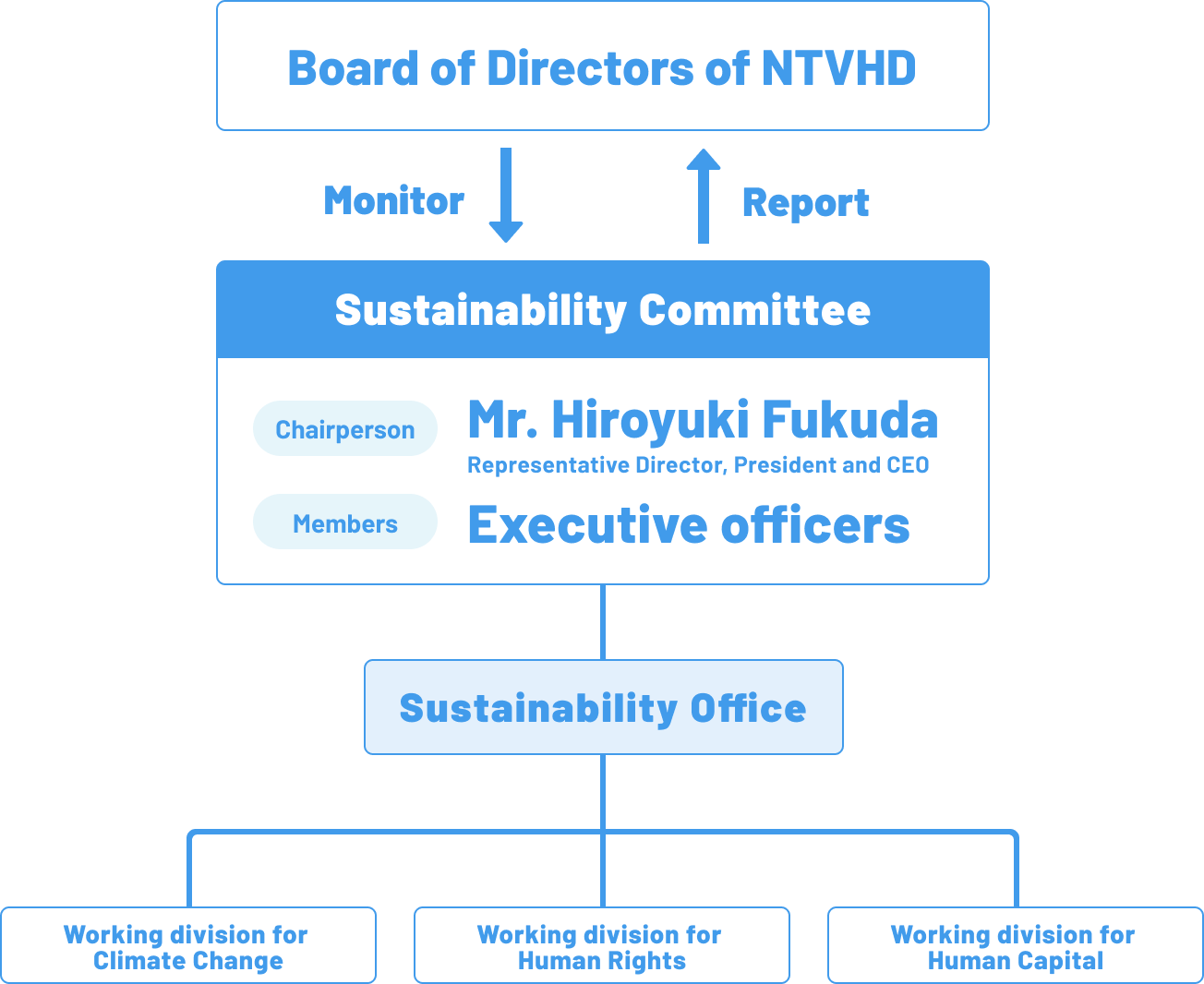
The Sustainability Committee (the “Committee”) plays a leadership role in driving our sustainability measures. Hiroyuki Fukuda, Representative Director, President and Chief Executive Officer of NTVHD, serves as the chairperson of the Committee, and executive officers of NTVHD serve as the members of the Committee.
Under the Committee, there is a Sustainability Office functioning as an operational organization, along with four working divisions (“Working division for Climate Change Countermeasures,” “Working division for Human Rights,” and “Working division for Human Capital,” and “Working division for Media Communication”). have been established, which consist of the heads of business departments of each Group company to examine measures to address sustainability issues and make recommendations to the Committee.
Meetings of the Committee are held twice a year, where the policies, targets and roadmaps of the Group as a whole are determined based on the recommendations of the working divisions. The Board of Directors receives reports from the Committee on important matters and the status of its activities, and determines response policies and other significant matters.
Roles of Each Sustainability-Related Organizations
Executive Chairman
President, Sustainability Enhancement
Acting President, Corporate Administration & Human Resources
Financial Management
Managing Director, Legal Affairs
Corporate Administration & Human Resources
Managing Director, Human Resources
Corporate Administration & Human Resources Acting President
Strategy
Strategy: Summary of Scenario Analysis
Assuming changes in the business environment resulting from climate change and trends in policies for global warming and related countermeasures, we examined the risks and opportunities for the following 16 Group companies under multiple climate scenarios recommended by the TCFD, specifically the 1.5°C and 4°C scenarios.
Content and Media Business—19 Companies
- Nippon TV
- BS Nippon Corporation
- CS Nippon Corporation
- NTV Technical Resources Inc.
(“NiTRo”) - AX-ON Inc.
- NTV EVENTS Inc.
- Nippon Television Art Inc.
- Nippon Television Music Corporation
- VAP Inc.
- MURAYAMA INC.
- la belle vie Inc.
- Nippon Television Service Inc.
- NTV Wands Inc.
- TATSUNOKO PRODUCTION Co., Ltd.
- HJ Holdings, Inc.
- ACM Co., Ltd.
- PLAY, inc
- Rights Inn Corporation
- ClaN Entertainment inc.
Wellness and Real Estate-Related Businesses—2 Companies
- TIPNESS LIMITED
- NTV Real Estate Inc.
Global surface temperature changes relative to 1850-1900
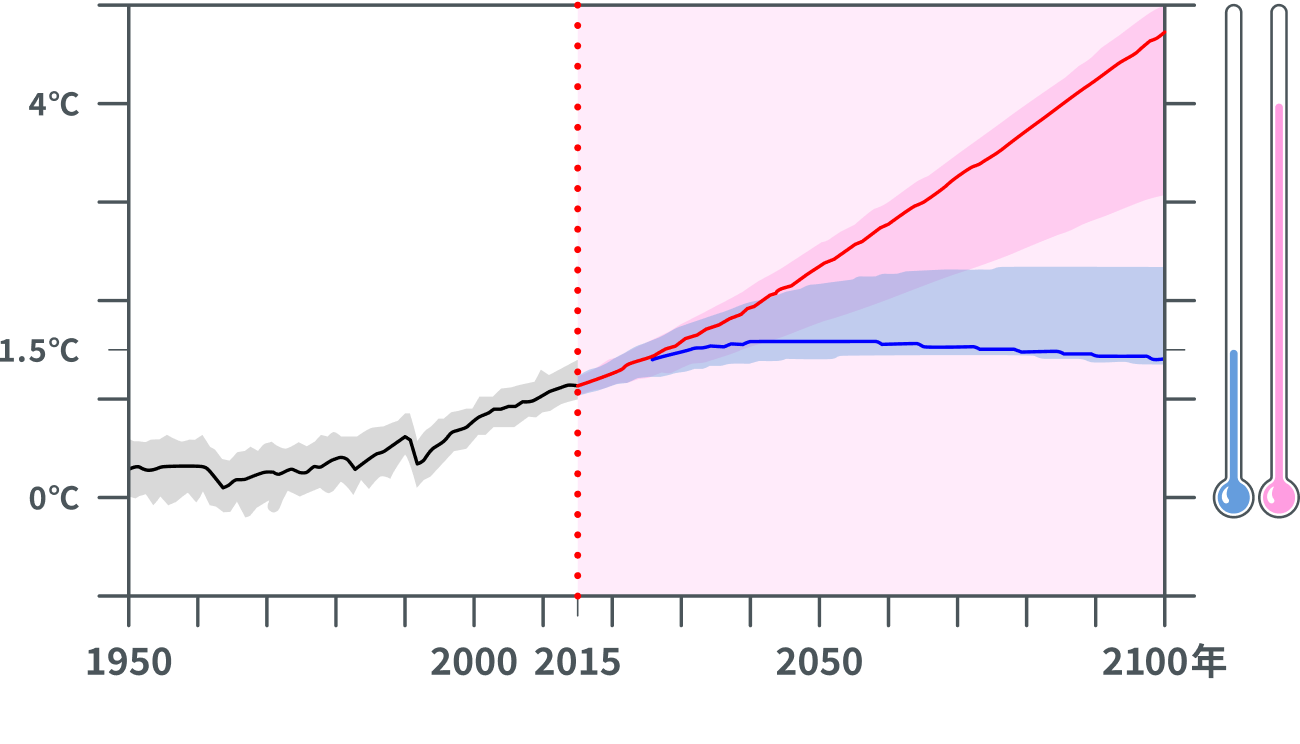
1.5°C Scenario
A scenario that assumes that strict regulatory measures will be implemented to reduce the amount of GHG emissions and that an increase in the global average temperature at the time of the end of this century will be within 1.5°C compared to the global average temperature before the Industrial Revolution. In this scenario, a low carbon society would develop rapidly, forcing us to respond to laws and regulations and societal demands.
- Reference: Scenario SSP1-1.9 of IPCC (Intergovernmental Panel on Climate Change) and Scenario NZE2050 of IEA (International Energy Agency).
4°C Scenario
A scenario that assumes that global warming countermeasures will not be thoroughly implemented and that by the end of this century the global average temperature will have risen approximately 4°C compared to the global average temperature before the Industrial Revolution. In this scenario, the physical impacts of climate change will become more pronounced, such as more frequent abnormal weather events and more devastating natural disasters.
- Reference: Scenario SSP5-8.5 of IPCC and Scenario STEPS of IEA.
Strategy: Major Risks, Opportunities, and Impact Assessment
Media Content Business
◎: Significant impact on the business
〇: Moderate impact on the business
△: Minor impact on the business
| Risk and Opportunity Classification | Risk and Opportunity Items | Importance Level | ||||
|---|---|---|---|---|---|---|
| 1.5°C Scenario | 4°C Scenario | |||||
| 2030 | 2050 | |||||
| Transition Risk | Regulations | Stricter GHG regulations | Increased business costs due to increased renewable energy prices, carbon taxes and emissions trading | ◎ | ◎ | ◎ |
| Technology | Increase in capital expenditures | Increased costs of capital expenditure for reducing electricity consumption | ○ | ○ | ○ | |
| Market | Higher average temperatures | Increased costs in program/event/product production due to price pass-through measures for CO2 reduction and decarbonization efforts | ○ | ◎ | ◎ | |
| Restrictions on outdoor news coverage, shooting, and event hosting during summer | ○ | ○ | ◎ | |||
| Spending more time staying indoors (i.e., spending less time going outdoors during summer) Adverse effects on holding and attracting customers to come to events, etc. | △ | △ | ○ | |||
| Reputation | Reputation | Deterioration of reputation among clients/stakeholders due to lagging initiatives to reduce CO2 emissions; risk of halted advertising and orders | ○ | ○ | ○ | |
| Negative viewer/customer reactions if CO2 reduction efforts lag despite environmental messaging in programs/events | ○ | ○ | ○ | |||
| Physical Risk | Acute | More frequent and devastating meteorological disasters | Increased risk of employees being affected by disasters and more difficulties in providing news coverage of disasters | ○ | ○ | ○ |
| Increased risk of cancellations for programs and events due to weather conditions | ○ | ○ | ◎ | |||
| Chronic | Rise in the sea level | Risk of company buildings and facilities being flooded by a storm surge | ○ | △ | ○ | |
| Health risks and response | Risk of employees suffering frequent heatstroke and reduced productivity due to outdoor work restrictions in summer | ○ | ○ | ○ | ||
| Increased costs of capital expenditures for ensuring a safe working environment for employees | ○ | ○ | ○ | |||
| Opportunity | Resource Efficiency | Improved employee awareness | Proactive CO2 reduction actions leading to lower energy costs as a result of improved employee awareness | △ | ○ | ○ |
| Changes in work styles | Changes in employee work styles, such as progress in DX and further use of remote work will make it possible to downsize office space | △ | △ | ○ | ||
| Products / Services | Changes in viewer/consumer preferences and sponsors’ needs | Demand and evaluation will increase for content related to global warming and sustainability, such as disaster reporting and Good For the Planet. | ○ | ○ | ○ | |
| Collaboration with sponsors sharing climate change awareness for campaigns/events | ○ | ○ | ○ | |||
| Development of environmentally conscious products; improved brand image and competitiveness | ○ | ○ | ○ | |||
| Spending more time staying indoors (i.e., spending less time going outdoors during summer) Increased demand for video content | ○ | ○ | ◎ | |||
Life and Health Related Business
◎: Significant impact on the business
〇: Moderate impact on the business
△: Minor impact on the business
| Risk and Opportunity Classification | Risk and Opportunity Items | Importance Level | ||||
|---|---|---|---|---|---|---|
| 1.5°C Scenario | 4°C Scenario | |||||
| 2030 | 2050 | |||||
| Transition Risk | Regulations | Stricter GHG regulations | Increased business costs due to increased renewable energy prices, carbon taxes and emissions trading | ○ | ○ | ◎ |
| Technology | Increase in capital expenditures | Increased costs of capital expenditure for reducing electricity consumption | ○ | ○ | ◎ | |
| Shift in Materials Used | Increased operational costs resulting from the transition to low-carbon materials for cleaning, maintenance, and related activities | ○ | ○ | ◎ | ||
| Market | Higher average temperatures | Risk of service price increases and reduced competitiveness due to price pass-through measures for CO2 reduction and decarbonization efforts | △ | △ | ○ | |
| Spending more time staying indoors (i.e., spending less time going outdoors during summer) Adverse effects on holding and attracting customers to come to events, etc. | ○ | ◎ | ◎ | |||
| Reputation | Reputation | Risk of negative reactions from stakeholders and customers due to lagging initiatives to reduce CO2 emissions | △ | △ | △ | |
| Physical Risk | Acute | More frequent and devastating meteorological disasters | Increased risk of employees being affected by disasters | ○ | ○ | ◎ |
| Negative effects of weather-related factors on customer engagement and solar power generation operations | ○ | ◎ | ◎ | |||
| Chronic | Rise in the sea level | Risk of company buildings and facilities being flooded by a storm surge | △ | △ | ○ | |
| Health risks and response | Risk of employees suffering frequent heatstroke and reduced productivity due to outdoor work restrictions in summer | △ | △ | ○ | ||
| Increased costs of capital expenditures for ensuring a safe working environment for employees | △ | △ | ○ | |||
| Opportunity | Resource Efficiency | Improved employee awareness | Proactive CO2 reduction actions leading to lower energy costs as a result of improved employee awareness | △ | △ | △ |
| Products / Services | Changes in lifestyles | Increased demand for fitness businesses due to increased awareness regarding health and management of physical condition | ○ | ○ | ○ | |
| Spending more time staying indoors (i.e., spending less time going outdoors during summer) Increased demand for online fitness services | ○ | ○ | ○ | |||
The Group’s Response to Risks and Opportunities
- Stricter GHG regulations
- ■Increasing the percentage of electricity from renewable sources
Nippon TV: Aims to achieve 100% renewable energy by FY 2030 (35% achieved in FY2025)
NTV EVENTS: Currently operates with 100% green electricity
■Implementation of carbon offsetting
Nippon TV: Offset all CO₂ emissions (29.66tCO₂) generated from 120 broadcasts of the travel program Umikoi: What We Can Do Now for the Sea through March 2026 by purchasing J-Blue CreditsⓇ.
NiTRo and Nippon TV Art: Implemented offset through the use of non-fossil fuel certificates.
ACM and Rights Inn: Switched to renewable energy.
■Reducing electricity consumption by expanding the use of power-saving equipment
Nippon TV: Aims to complete the installation of 100% LED lighting equipment by 2031
Install solar panels on the roof of the Ikuta studio to generate in-house power
TIPNESS: Has completed the installation of 100% LED lighting equipment in all of its fitness club stores
Completed the installation of water-saving valves in shower rooms, working to conserve resources - Change in Material Usage
- ■Initiatives to go paperless
Nippon TV: Promoting initiatives to go paperless, such as digitalizing internal documents and contracts, using digital tools when giving instructions to performers—replacing traditional cue cards that were previously written in sketchbooks
■Transition in studio set materials
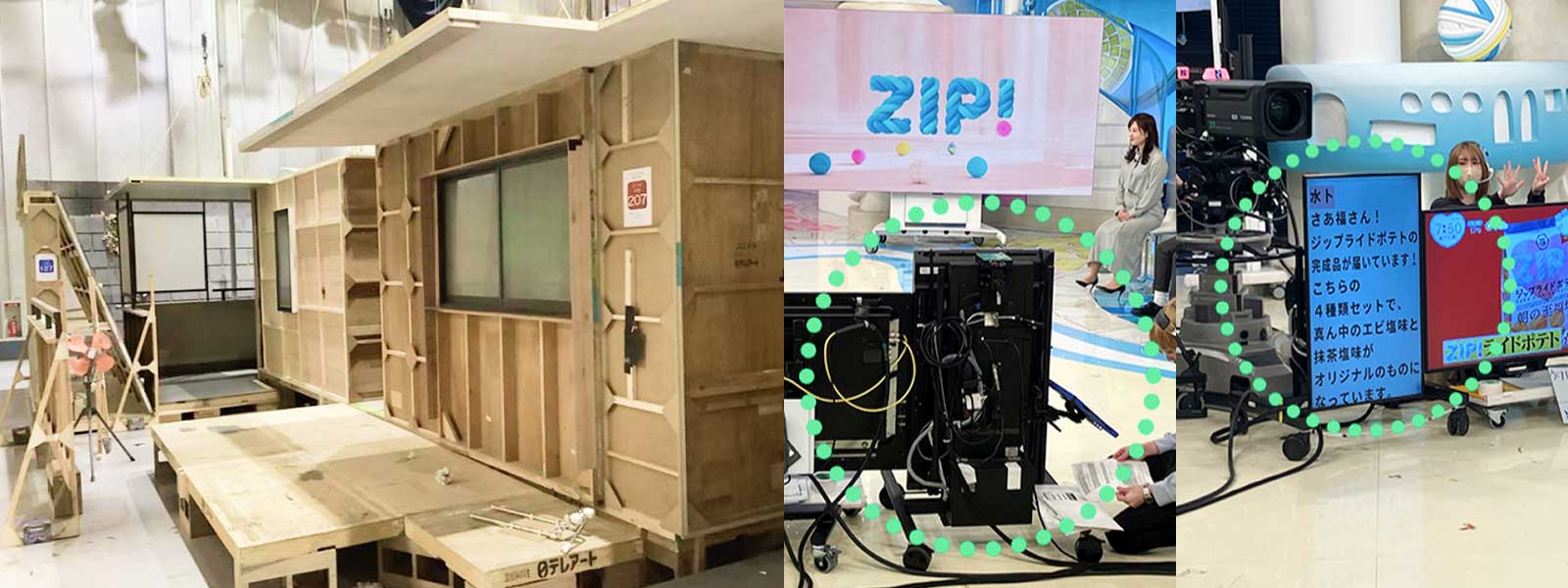
NTV ART: For studio sets for TV programs and other productions, prototypes and trial operations are conducted using environmentally friendly materials as alternatives to tropical timber (lauan wood), which has traditionally been used - Reputation
- ■Proactive disclosure of environment-related information
NTVHD: Expand GHG emissions calculation and disclosure across the entire Group
Promptly respond to stakeholder inquiries regarding GHG emissions
■Communicating through content
Nippon TV: Actively raise awareness of climate change and environmental issues through programs and campaigns such as Good For the Planet, Tokoro-San no Mega Ten!, and The! Tetsuwan! Dash!!.
■Collaboration with stakeholders
Nippon TV: Engages in proactive communication on marine environmental conservation by producing travel programs such as Umikoi: What We Can Do Now for the Sea, in collaboration with partner companies that support the mission of the Japanese Archipelago Blue Carbon Project.
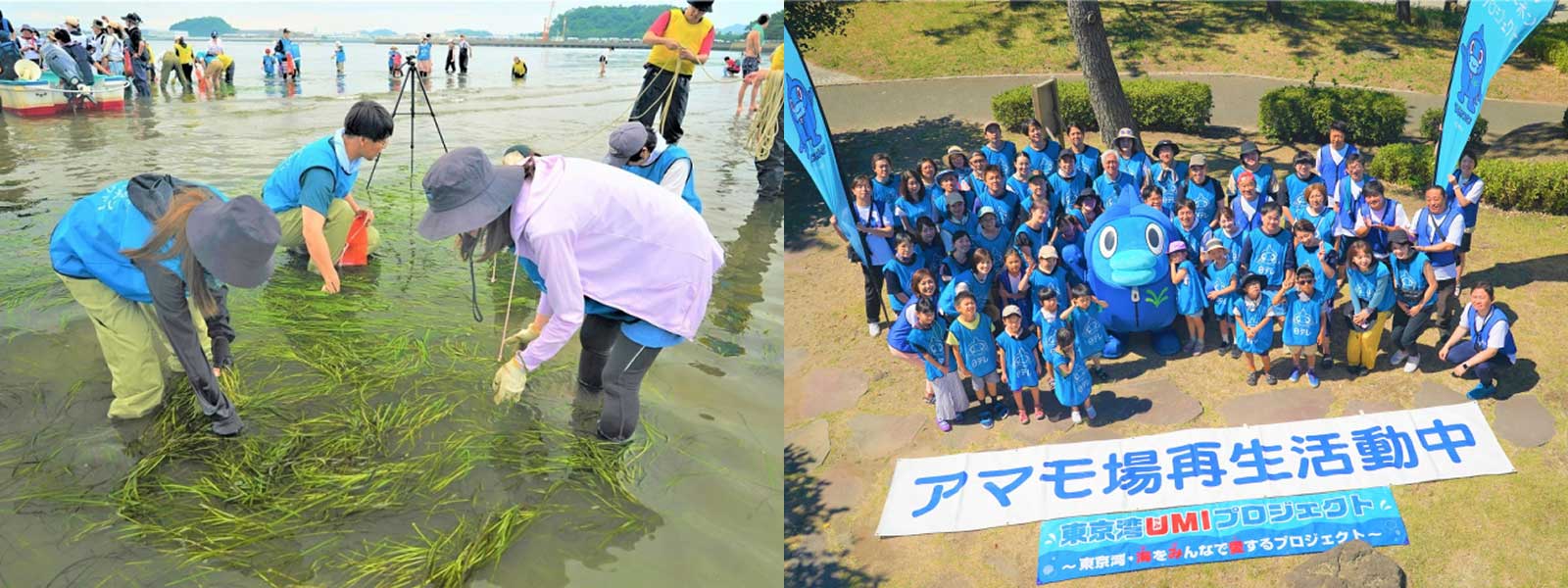
Has signed a comprehensive partnership agreement with five municipalities on the Miura Peninsula—Yokosuka city, Miura City, Kamakura City, Zushi City, and Hayama Town—to promote a project to create eelgrass beds in Tokyo Bay - Physical Risk
- ■Building a system for broadcast continuity
Nippon TV: Has established a system to ensure broadcast continuity in collaboration with the Osaka-based Yomiuri Telecasting Corporation, leveraging Yomiuri TV’s infrastructure in the event that its Shiodome headquarters is impacted by storm surges or other disasters
■Promoting digital transformation (DX) and expanding remote work
Entire Group: Actively promoting the digital transformation of internal systems and expanding remote work policies across organizations
Risk Management
The Sustainability Committee, chaired by the President and CEO, evaluates sustainability-related risks and opportunities across the Group. Based on reports from the Sustainability Office and working divisions, the Committee identifies these risks and opportunities by considering factors such as time horizon and financial impact, and appropriately assesses their impact on management. Additionally, any matters deemed material risks are promptly reported to the Board of Directors. When necessary, the Committee shares information with, and collaborates with, the Risk Management Committee to determine countermeasures aimed at minimizing risks.
Relevant departments and Group companies manage identified risks and opportunities by recognizing them and appropriately reflecting and reviewing them in documents such as the annually updated Sustainability Policy Action Plan.
Metrics and Targets
Targets
- 1
NTVHD will aim to expand the number of Group companies that disclose the amount of GHG emissions (Scope 1 and Scope 2) beyond the current 21 companies.
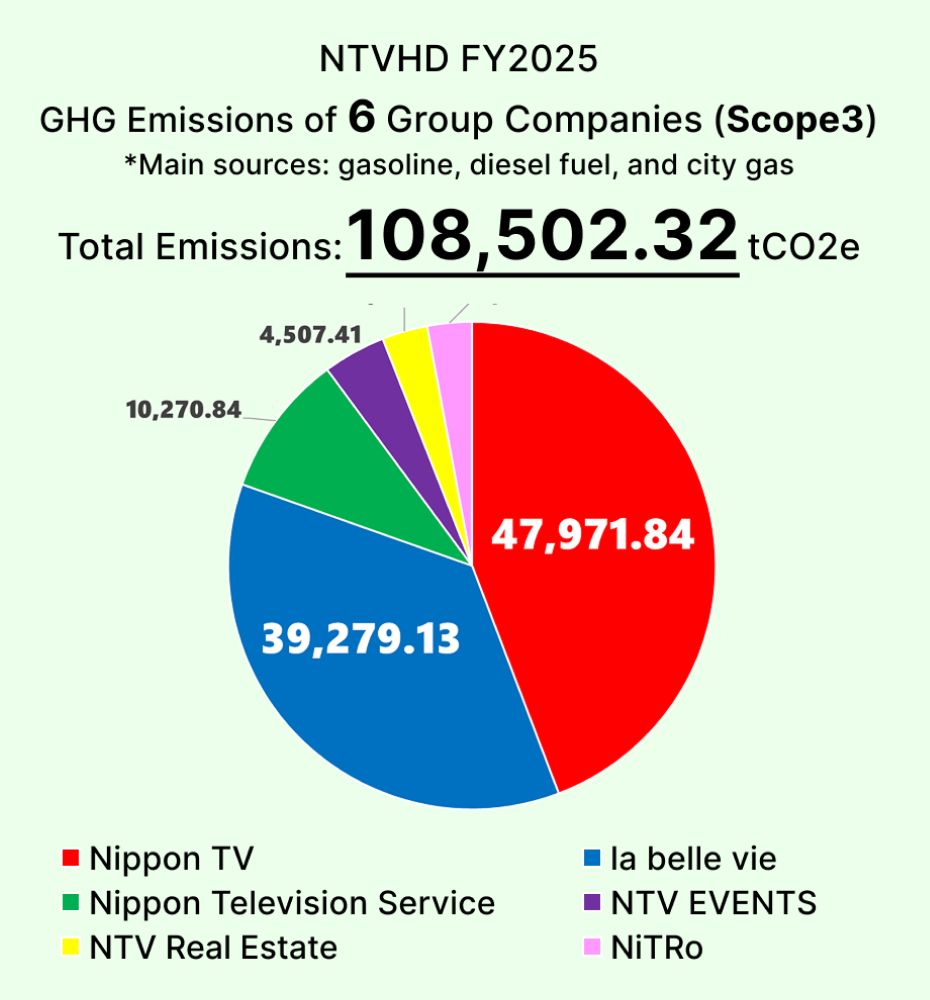
With respect to Scope 3 emissions, although the target for FY2025 was to calculate emissions for two companies, six companies successfully completed the calculation. Building on this achievement, we aim to further expand Scope 3 emissions calculations in FY2026. - 2
Nippon Television Network Corporation will achieve a renewable energy percentage of 100% in all electricity consumed by FY 2030. For FY2026, the Company aims to achieve a 50% renewable energy ratio, following the achievement of 35% in FY2025.
- 3
NTVHD will aim to become a carbon neutral organization by FY 2050.
- Scope1:
Direct emissions from businesses - Scope2:
Indirect emissions through the purchase of electricity, heat, and steam - Scope3:
All indirect emissions not included in Scope 2 (Emissions by others related to the business’s activities)
Metrics
FY 2025 GHG Emissions
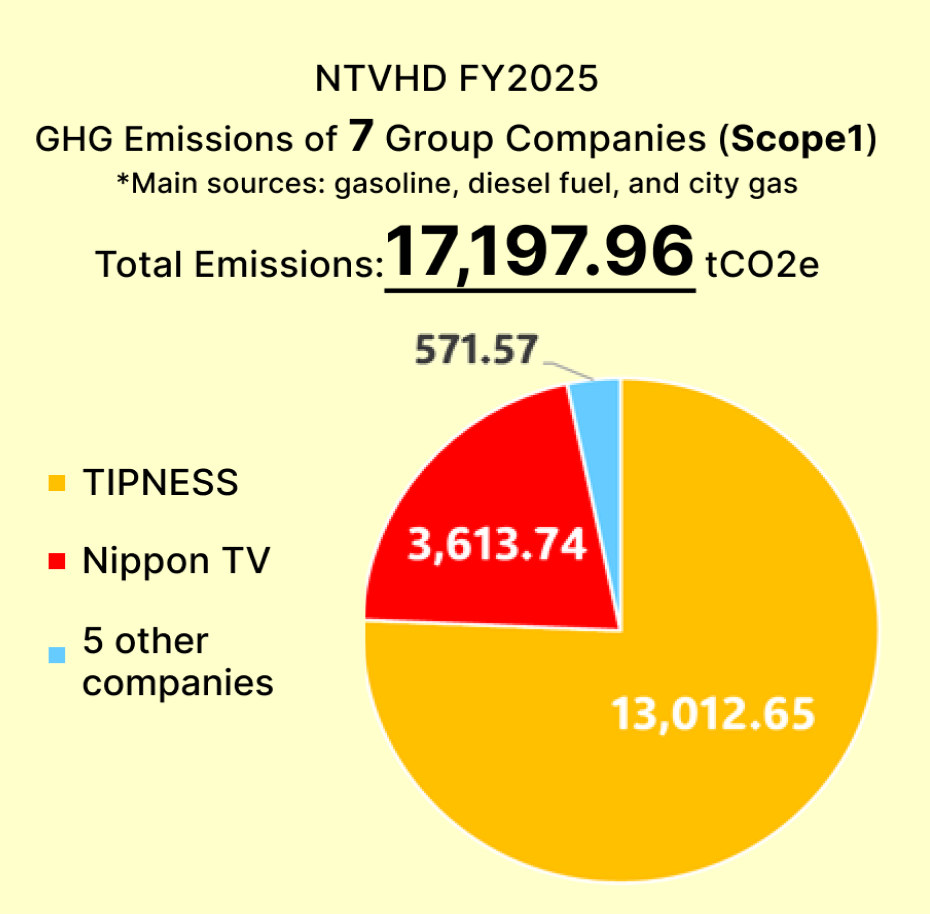
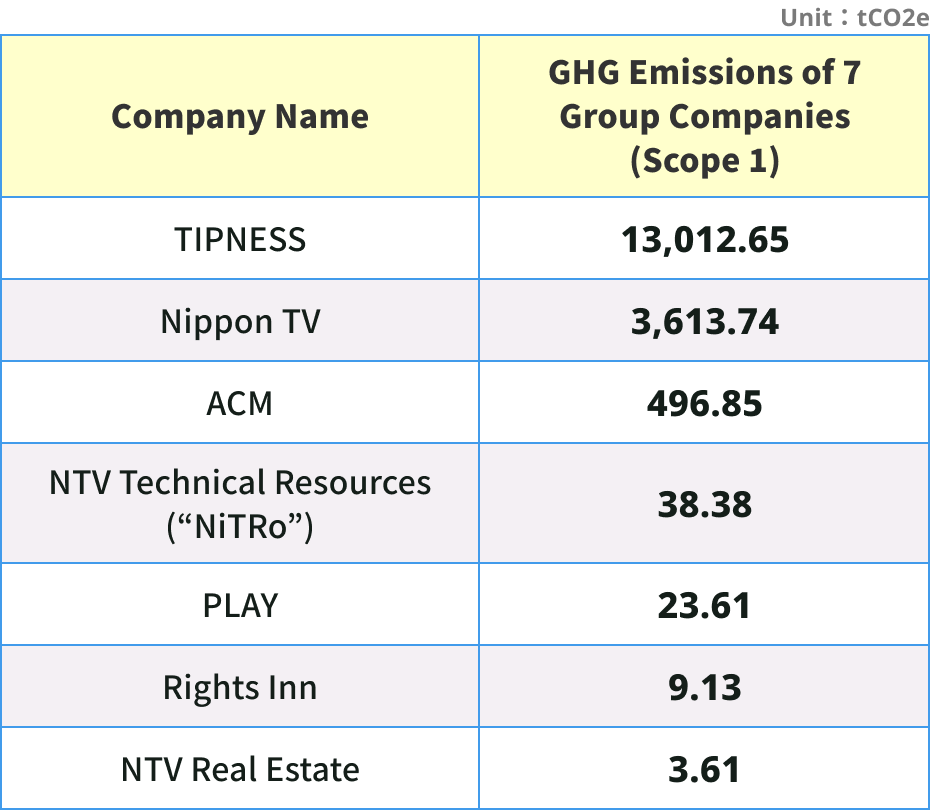
Scope1※
17,197.96 tCO₂e
※No Scope 1 emissions were recorded for the other 14 companies not listed above.
Scope2
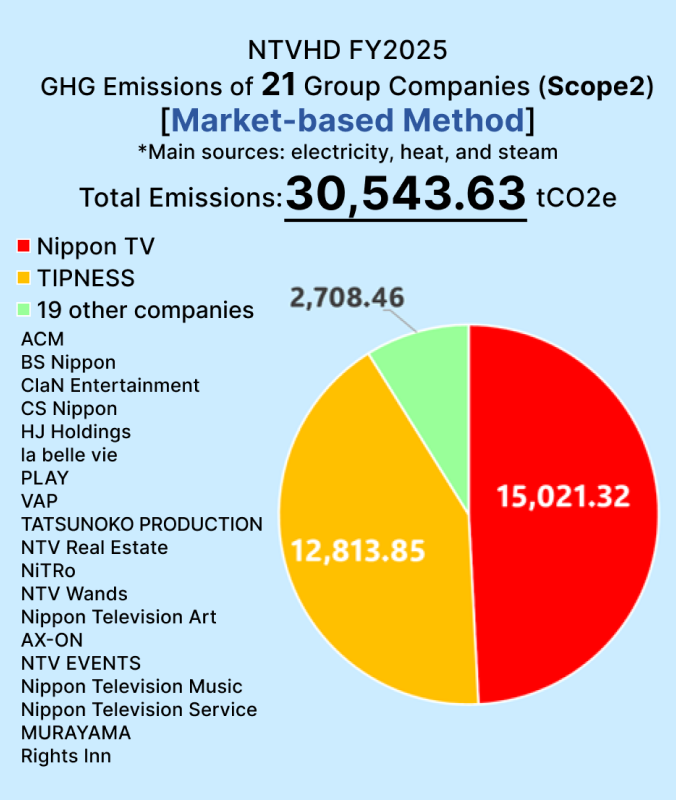
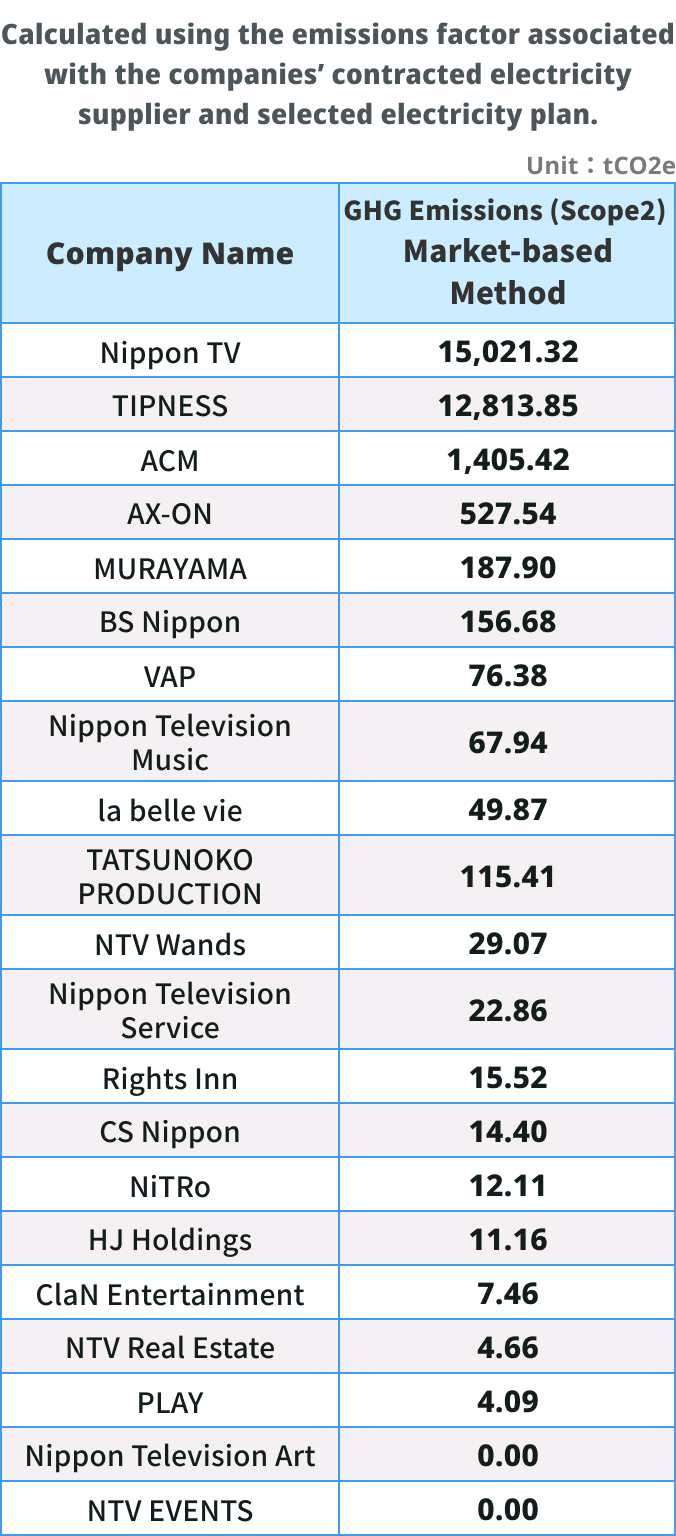
Market-based Method:
30,543.63 tCO₂e
Location-based Method:
35,790.10 tCO₂e
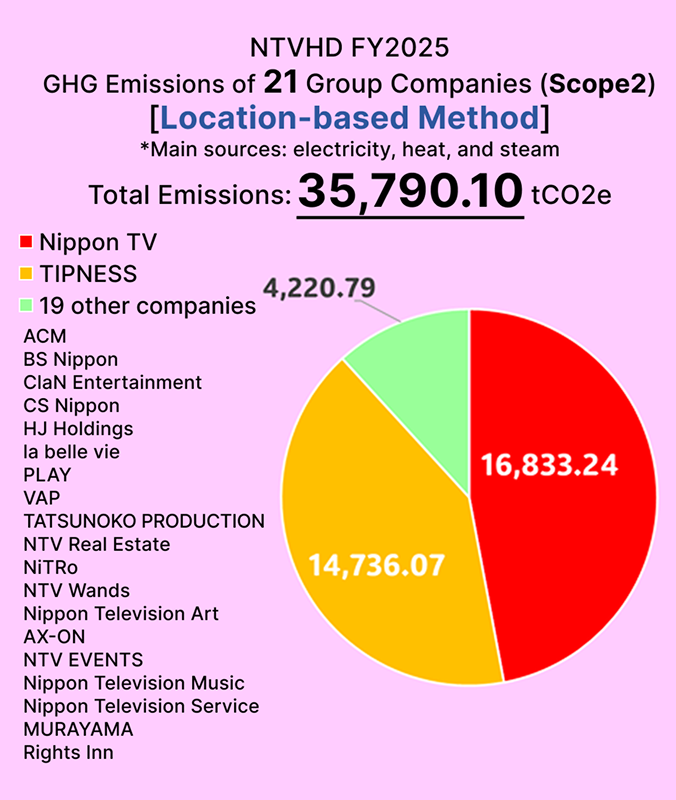
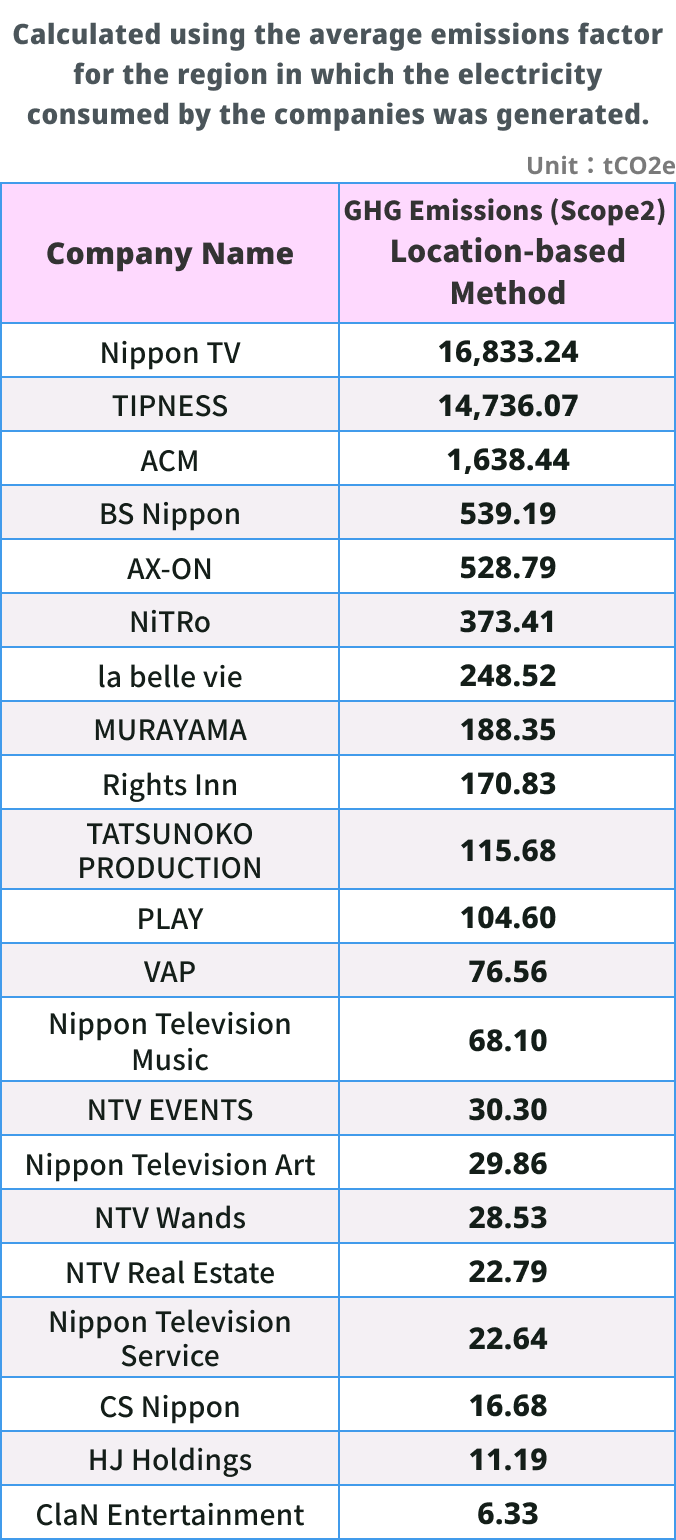
Scope3
108,502.32 tCO₂e
(Calculated by 6 Companies)
Nippon TV – FY2025 GHG Emission Intensity (Scope 1, 2, and 3)
- Calculation Result1
GHG Emission Factor Related to Broadcasting Operations
0.20 tCO2e per \1 million in revenue *1,3
- *1 CO2 equivalent emissions generated per \1 million in revenue
- Calculation Result2
GHG Emission Factor Related to Broadcasting Operations
23.23 kgCO2e per 15 seconds of broadcast *2, 3
- *2 CO2 equivalent emissions generated per 15 seconds of broadcasting
- *3 Calculated based on advertising revenue, referencing the Ministry of the Environment’s Basic Guidelines on Accounting for Greenhouse Gas Emissions Throughout the Supply Chain.